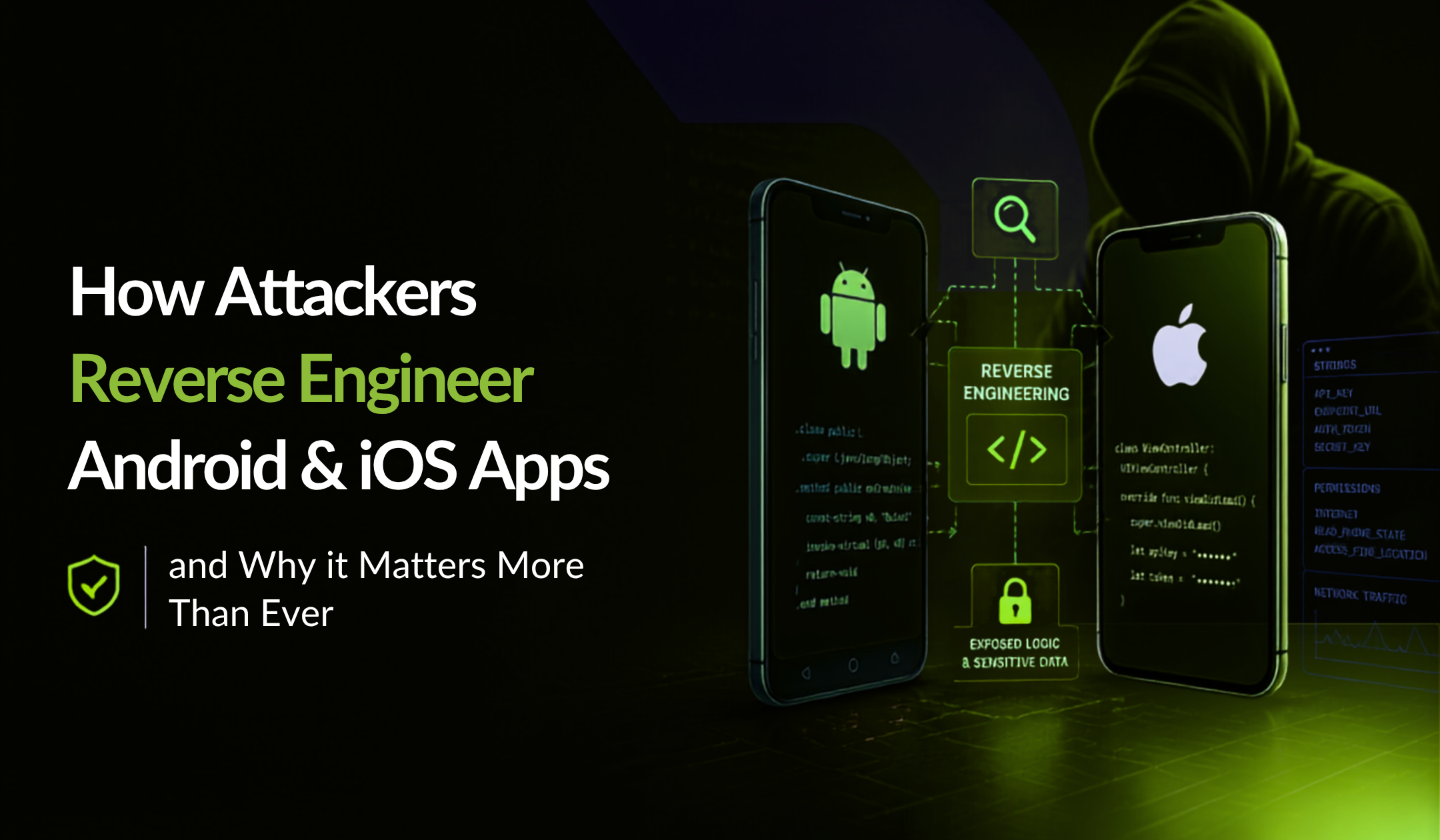
Why every modern enterprise needs an end-to-end mobile app security strategy from secure code to runtime protection.
Mobile applications have become the front door of every modern business. From banking and healthcare to gaming, e-commerce, and government services, organisations now rely on apps to engage customers, process payments, and deliver mission-critical workflows. But every new app released into the wild also creates a fresh attack surface and cybercriminals are paying attention. Recent industry research suggests that more than 90% of mobile applications contain at least one exploitable vulnerability, and many ship with multiple critical flaws.
In this guide, we break down everything business and technical leaders need to know about mobile application security in 2026: what it is, why it matters, the most common threats and vulnerabilities, OWASP Mobile Top 10, AI-powered attacks, regulatory pressure, and the preventive measures that actually work. We close with a practical checklist and a look at how Quixxi helps organisations move from reactive testing to proactive protection.
What is Mobile Application Security?
Mobile application security is the practice of safeguarding mobile apps from threats and vulnerabilities that could compromise user data, app functionality, or device integrity. It combines secure coding, app hardening, encryption, authentication controls, secure communication, and runtime protection so that only authorised users can access the app and so the app itself cannot be tampered with, reverse-engineered, or repackaged.
Effective mobile app security is not a single product or a one-time test. It is a continuous strategy that protects your app across its entire lifecycle: development, testing, release, and runtime.
Why Mobile App Security Matters?
Mobile apps handle some of the most sensitive data in your business: identity, payments, health records, location, and proprietary business logic. They also run on devices you do not control, where attackers can reverse engineer the binary at their leisure. Fintech, healthcare, government, gaming, e-commerce, and enterprise productivity apps are all top targets and the cost of a single breach now routinely runs into millions of dollars in fines, remediation, churn, and brand damage.
Several forces are accelerating the threat:
- Faster release cycles that push security to the end of the sprint.
- Heavy reliance on third-party SDKs and APIs that inherit supplier vulnerabilities.
- AI-powered attacks – automated reverse engineering, smart API fuzzing, deepfake-driven social engineering, and AI-generated clone apps.
- Distributed code on user devices that can be inspected, tampered with, or repackaged.
Top Risks and Vulnerabilities
The risks that show up most often in real-world breaches:
- Insecure data storage – credentials, tokens, and PII stored in plaintext on the device.
- Broken authentication and authorisation – weak passwords, missing MFA, poor session management.
- Insecure communication – missing TLS, no certificate pinning, vulnerable to MITM attacks.
- Code tampering and reverse engineering – attackers extracting secrets or distributing cloned apps.
- Insecure APIs – increasingly the primary entry point into your back-end systems.
- Vulnerable third-party libraries – unpatched SDKs that quietly expose your app.
These map directly to the OWASP Mobile Top 10, the industry-standard reference for mobile app risks – covering issues like improper credential usage, insufficient binary protections, insecure data storage, and insufficient cryptography. OWASP MASVS and MASTG are the supporting frameworks your security team should be measuring against.
iOS vs Android: A Quick Note
iOS apps benefit from a closed App Store and encrypted binaries, but jailbreaking and dynamic instrumentation remain real threats. Android faces more fragmentation, sideloading, and easier decompilation of APK/AAB files, making obfuscation, anti-tamper, and root detection essential. Either way, both platforms need a layered defence.
Preventive Measures: A Practical Checklist
Use this as a quick health check across your mobile programme:
- Threat-model the app and align to OWASP MASVS.
- Run SAST, DAST, and API scans on every build inside CI/CD.
- Encrypt data at rest (AES-256) and in transit (TLS 1.3).
- Enforce MFA and biometric authentication for sensitive flows.
- Pin certificates and validate server identity.
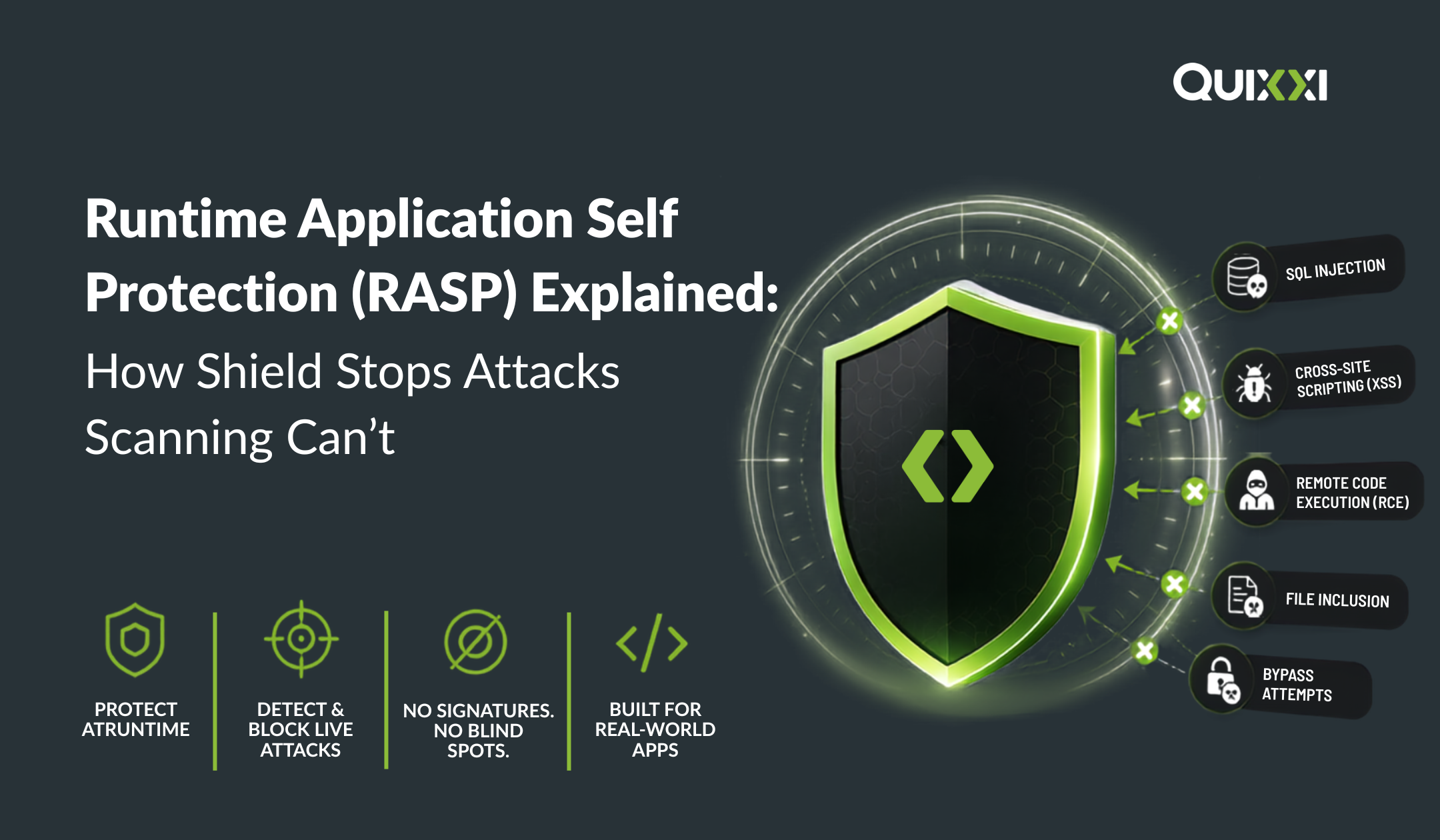
- Obfuscate code, harden binaries, and add RASP for runtime defence.
- Maintain an SBOM and patch third-party libraries promptly.
- Monitor live apps for active threats and abuse.
- Map controls to GDPR, HIPAA, PCI-DSS, and local privacy laws.
- Run penetration tests annually and after major releases.
The Expanding Security Boundary: AI in Mobile Applications
Modern mobile apps no longer just run code, they embed AI features, third-party models, and tools like Copilot or large language models. That expands the security boundary far beyond the app binary and creates a new category of risk: AI is being adopted faster than it can be governed.
Enterprises now need to:
- Govern AI across the enterprise with centralised visibility into where AI is being used.
- Manage AI-driven mobile app risks like data leakage through prompts, model tampering, and biased decision-making.
- Detect shadow AI inside mobile ecosystems – third-party SDKs, embedded models, and unsanctioned tools that bypass review.
- Maintain AI risk visibility and compliance for emerging regulations like the EU AI Act and ISO 42001.
This is where Quixxi Clarity AI fits. Clarity AI is an enterprise AI governance, risk, and assurance platform that sits above your existing AI systems – internal models, third-party APIs, embedded SDKs, and tools like Copilot. It delivers a central inventory of AI in use (including shadow AI), automated governance and approval workflows, continuous risk detection, and regulator-ready reporting, all backed by SOC 2 Type II, ISO 27001, and an AI Ethics Framework.
How Quixxi Helps Secure Your Mobile Applications
Quixxi is the only provider of a patented and proprietary mobile app security solution, trusted by fintech, government, and IT services. Instead of stitching together point tools, Quixxi gives you a unified platform that covers the full mobile app security lifecycle:
- Quixxi SAST Scan: Detects vulnerabilities, hardcoded secrets, and insecure dependencies in your source code and binaries.
- Quixxi DAST Scan: Identifies runtime issues by testing the live application against real-world attack patterns.
- Quixxi API Scan: Hardens the back-end APIs your mobile app relies on increasingly the primary target for attackers.
- Quixxi Shield: Applies code hardening, encryption, anti-tamper, and RASP so your app defends itself in the wild.
- Quixxi Supervise: Continuously monitors published apps for live threats, abuse, and emerging attack techniques.
- Quixxi Clarity AI: Brings AI-driven insights to security teams, prioritising the issues that actually matter.
Quixxi integrates seamlessly into modern CI/CD pipelines, helping teams ship securely without slowing down. With SOC 2 Type II, CMMI, and patented technology behind it, Quixxi gives security and engineering leaders the confidence that every release is protected from first commit to live runtime.
Ready to secure your mobile applications?
Mobile threats are not slowing down and neither should your defences. Whether you are a startup launching your first app or an enterprise managing a fleet of mission-critical mobile products, Quixxi can help you move from reactive testing to proactive, AI-aware protection.
Request a demo today and experience our award-winning no-code, instant-integration platform quixxi.com