Mobile applications are now considered to be the backbones of all digital business. From facilitating financial transactions to creating healthcare solutions and even powering business productivity and customer engagement solutions, mobile applications are now considered to be the most critical applications in the digital ecosystem.
However, this rapid growth also creates larger attacks surface that cybercriminals can exploit. Recent research in cybersecurity revealed that there are over 90 percent of mobile applications that possess at least a single security vulnerability, and many of these applications also possess multiple critical security vulnerabilities that cybercriminals can exploit. As business continue to increase their pace of digital transformation, securing mobile applications is not only a good idea but a fundamental business imperative.
As a way of assisting mobile app developers and business in mitigating the most critical mobile app security risks, the Open Web Application Security Project (OWASP) established a widely accepted standard known as the OWASP Mobile Top 10, which lists the most common and critical security vulnerabilities that mobile applications re susceptible to.
As a security professional or a mobile app developer, it is important to first understand these risks to develop a secure mobile app ecosystem.
What is the OWASP Mobile Top 10?
The OWASP Mobile Top 10 is an awareness document that helps to identify the most critical security issues facing mobile applications. It acts as a guide for developers, security professionals, and organisations to help them identify, prioritise, and mitigate these issues during the development process
- The new OWASP Mobile Top 10 consists of following issues:
- Improper Credential Usage
- Inadequate Supply Chain Security
- Insecure Authentication and Authorisation
- Insufficient Input and Output Validation
- Insecure Communication
- Inadequate Privacy Controls
- Insufficient Binary Protections
- Security Misconfiguration
- Insecure Data Storage
- Insufficient Cryptography
These risks are the most common vulnerabilities exploited by attackers targeting mobile applications. By knowing these risks, organisations can build a solid foundation for secure application development.
Why Mobile Security Is Becoming a Critical Business Issue
Mobile applications are more vulnerable compared to traditional web-based systems. Unlike traditional server-side infrastructure, mobile application run on user devices, which can be exploited by attackers using reverse code engineering and communication interception.
Some of the key reasons for increasing mobile security risks are:
Rapid App Development Cycles
Organisations are rolling out mobile features quicker than ever to stay competitive in the market. While spend is a great advantage for innovation, it is also possible to miss out on potential risks in app development.
Heavy Use of Third-Party Components
Mobile applications are built using a lot of third-party components like SDKs, open-source libraries, and APIs. While using third-party components is a great advantage for app development, it is also a potential risk in case of vulnerabilities in third party components.
Sensitive Data Handling
Mobile applications handle sensitive data such as:
- Identity information
- Financial transactions
- Authenticating information
- Location information
- Health information
If these data are not properly protected, they are vulnerable to data exposure through storage, encryption, and API security.
Increasing Sophistication of Cyber Attacks
Cyber attackers are becoming more sophisticated and are using:
- Reverse engineering mobile binaries
- Man-in-the-middle attacks
- API exploitation
- Credential stuffing
- Runtime manipulation
If mobile applications are not properly protected, they can serve as entry points for cyber attackers to attack the larger digital infrastructure of the organisation.
Key OWASP Mobile Top 10 Risks Explained
Although all the risk in OWASP Mobile Top 10 are of equal importance, there are a few that have come up more often.
Improper Credential Usage
One of the most common vulnerabilities occurs when developers improperly handle authentication credentials.
Improper usage of user authentication credentials is one of the most commonly occurring vulnerabilities in mobile apps.
Some of its instances include:
- Hard-coded API keys in the app’s code
- Lack of proper password policy
- Lack of proper token management
- Lack of multi-factor authentication
Once attackers get access to such credentials, they can easily pretend to be users or access the app’s backend.
Insecure Authentication and Authorisation
Authentication vulnerabilities are weaknesses in applications where proper identification and authorisations of users and access are lacking.
Some of the common vulnerabilities in authentication and authorisations are:
- Improper session management
- Weak authentication
- Missing authorisation checks
- Reliance on client-side validation
This vulnerability may allow an attacker to bypass the authentication and gain unauthorised access a system.
Insecure Data Storage:
Mobile applications store data on the mobile device. This data, if not stored in an encrypted manner, can be easily accessed and stolen from the mobile device. This can be achieved in following ways:
- Device rooting or jailbreaking
- Memory inspection
- Debugging tools
Secure mobile applications ensure that sensitive data is stored in an encrypted manner.
Insufficient Binary Protection
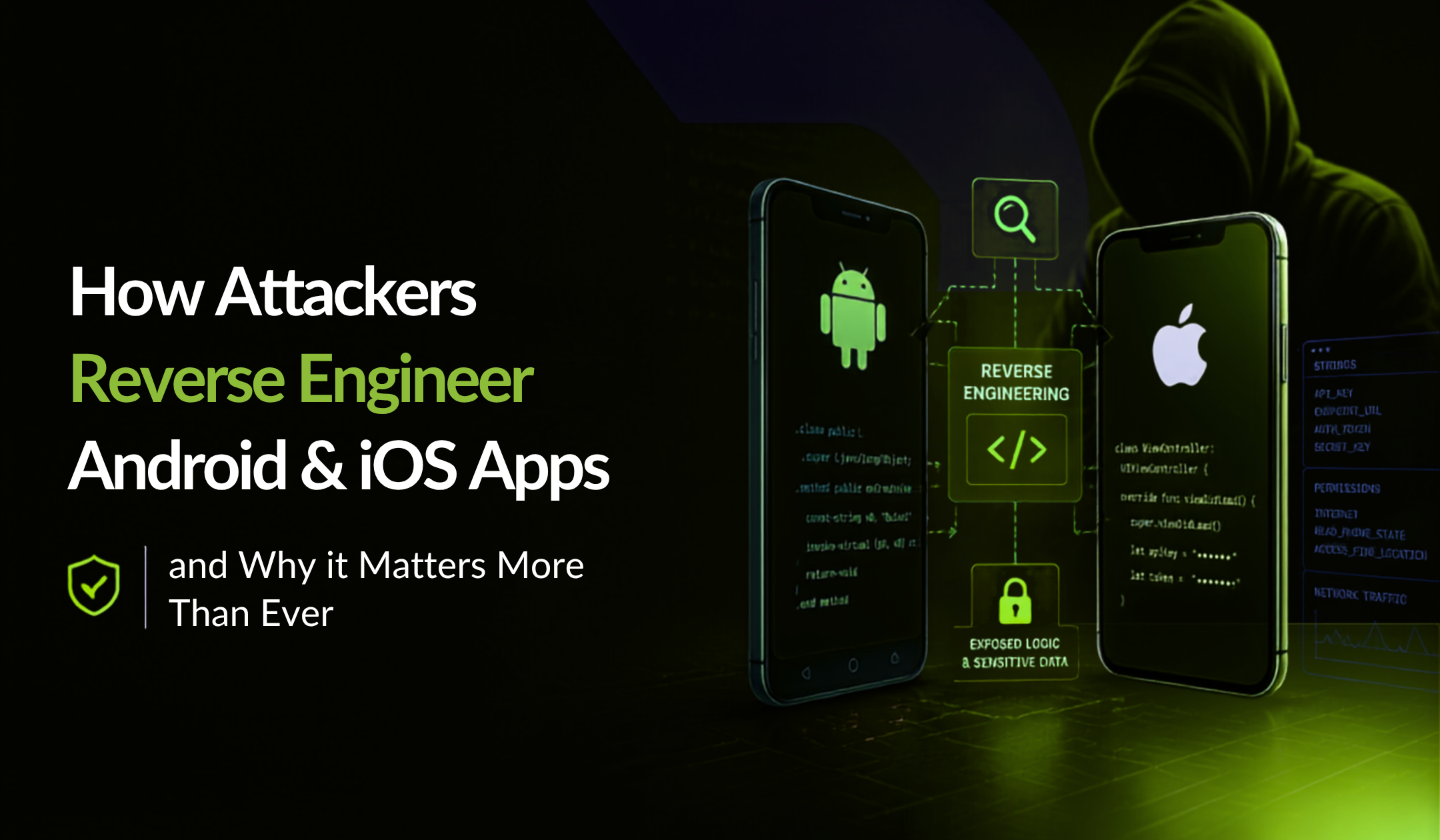
Mobile applications are delivered in binary format. This can be easily reverse-engineered and can lead to security breaches. These security breaches can be achieved in following ways:
- Reverse engineering
- Modification of the application
- Injection of malware
- Bypassing security controls
Binary protection is required to prevent these security breaches.
Traditional Mobile Security vs Modern Security Platforms:
Most organisations use outdated or patchwork approaches to mobile security that do not address the realities of mobile threats.
| Security Approach | Traditional Security Methods | Modern Mobile Security with Quixxi |
|---|---|---|
| Security Testing | Manual testing performed occasionally | Continuous automated security testing |
| Development Integration | Security added late in development | Security integrated throughout the development lifecycle |
| Vulnerability Detection | Limited static scanning | Advanced vulnerability detection aligned with OWASP standards |
| Binary Protection | Minimal protection against reverse engineering | Strong binary protection and anti-tampering controls |
| Monitoring | Reactive response after vulnerabilities are discovered | Continuous monitoring and proactive threat detection |
| Development Speed | Security often slows down releases | Security integrated without disrupting development workflows |
This move from reactive security to proactive protection is critical for organisations that wish to develop modern mobile platforms.
How Quixxi Helps Organisations Secure Mobile Applications
Securing mobile applications is more than just testing them from time to time. What is needed is a continuous security strategy that is integrated into the development and deployment of the mobile applications.
Quixxi is a mobile security platform that is meant to assist organisations in protecting their mobile applications against the threats they face while remaining flexible enough to allow for the continuous development of the mobile applications.
The Features of the platform include:
Continuous Security Monitoring
Detect and prevent security flaws in the mobile applications at the earliest stages of the development lifecycle.
Automated Security Testing
Identify and detect vulnerabilities based on the OWASP Mobile Top 10.
Binary Protection and Anti-Tampering
Protect mobile application binaries from reverse engineering, manipulation, and unauthorised modifications.
Secure Development Integration
Seamlessly integrate mobile security into CI/CD pipelines to ensure that development teams can deliver speed along with enhanced security posture.
By incorporating mobile security into the entire mobile development lifecycle, organisations can minimise risk while delivering secure digital experiences.
The Future of Mobile Application Security
The use of mobile applications in running digital business in various industries is on the rise. This, in turn, means that the importance of security best practice will continue to increase soon. The OWASP Mobile Top 10 is significant framework for understanding the most common security vulnerabilities. However mobile application security in the modern era is complex issue and must be addressed with a broader framework, including:
- Secure Development Practices
- Vulnerability Monitoring
- Runtime
- Supply Chain
- Advanced Mobile Application Protection
The use of a platform like Quixxi is instrumental in ensuring that security is no longer an afterthought in developing mobile applications.